
A Dose of Laughter
The Evolution of Gelotology in Clinical Medicine
The study of laughter, clinically termed gelotology, has undergone a profound transformation over the past twenty-five years. Historically dismissed as a mere behavioral byproduct of positive affect or a sociological signaling mechanism, laughter is now increasingly recognized within the medical community as a complex, systemic physiological event with quantifiable therapeutic potential. The period from 2001 to 2026 has been characterized by a shift from anecdotal observation to rigorous empirical validation, utilizing randomized controlled trials (RCTs), specific biomarker assays, and advanced imaging techniques to map the biological footprint of laughter.
This report synthesizes the clinical evidence accumulated over this quarter-century, specifically focusing on "deep belly laughter"—a high-intensity, diaphragmatic respiratory maneuver. Unlike superficial amusement, deep laughter engages the core musculature, alters intrathoracic pressure, and triggers a cascade of neuroendocrine, cardiovascular, and immunological responses. The data reviewed herein suggests that deep laughter functions as a potent physiological intervention, capable of modulating the Hypothalamic-Pituitary-Adrenal (HPA) axis, enhancing endothelial function, optimizing immune surveillance, and regulating metabolic parameters in adults.
1.1 Defining the Physiological Stimulus
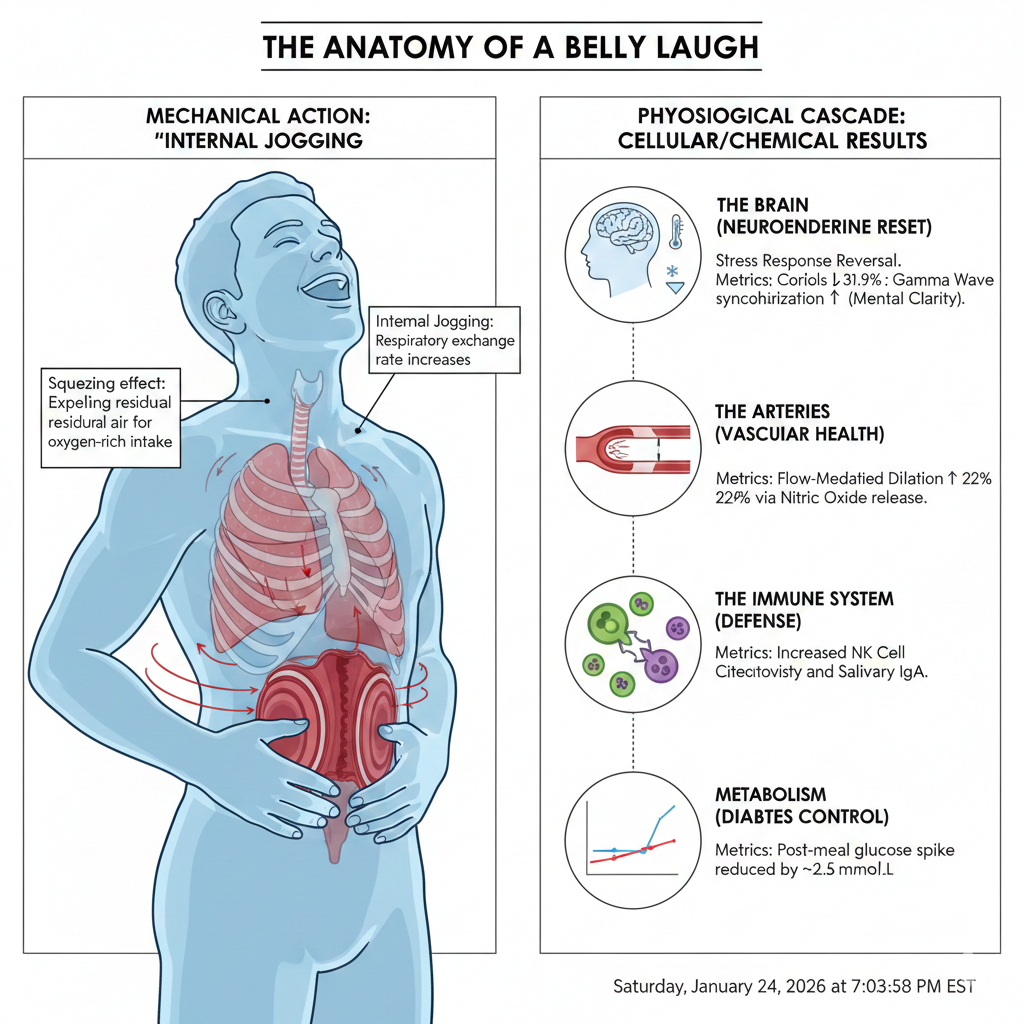
In the context of this report, "deep belly laughter" is defined by its physiological mechanics rather than its emotional antecedent. It involves the rhythmic, involuntary contraction of the diaphragm and intercostal muscles, often described as "internal jogging." This action creates a distinctive respiratory pattern characterized by prolonged, forced exhalation followed by deep, gasping inspiration.
The research distinguishes between two primary modalities of this stimulus:
Mirthful Laughter (Spontaneous): Laughter triggered by an external humorous stimulus (e.g., comedy, jokes) which involves a cognitive appraisal component and an emotional response.1
Simulated Laughter (Self-Induced): Laughter generated through volition and physical exercise (e.g., Laughter Yoga), which bypasses cognitive humor appreciation but attempts to elicit the same physiological mechanics. The "Facial Feedback Hypothesis" suggests that the somatic action of laughing can retroactively trigger the associated neurochemical state.3
1.2 Clinical Relevance in Adult Populations
The impetus for this extensive research lies in the rising burden of chronic non-communicable diseases—specifically cardiovascular disease, type 2 diabetes, and stress-related affective disorders. As healthcare systems seek cost-effective, non-pharmacological adjunctive therapies, laughter has emerged as a viable candidate. The evidence indicates that the physiological aftereffects of a "laughter bout" can endure for minutes to hours, accumulating over time to produce clinically significant changes in baseline health metrics.5
2. Respiratory Mechanics and Pulmonary Dynamics
To understand the systemic effects of laughter, one must first analyze the mechanical event itself. Deep belly laughter is fundamentally a respiratory phenomenon, and the clinical data regarding its impact on lung function is robust.
2.1 The Mechanics of "Internal Jogging"
During a bout of deep laughter, the respiratory cycle is drastically altered. Normal tidal breathing is replaced by a series of rapid, staccato exhalations. Research utilizing esophageal and gastric pressure sensors has revealed the intensity of this maneuver. During laughter, the diaphragm contracts spasmodically, and abdominal pressure increases significantly.
A landmark study examining lung and chest wall mechanics found that fits of laughter are characterized by repetitive expiratory efforts at a frequency of approximately 4.6 Hz. This rapid compression leads to a substantial drop in Functional Residual Capacity (FRC)—the volume of air remaining in the lungs after a normal passive exhalation. In healthy subjects, laughter can reduce lung volume by an average of 1.55 liters below the relaxation volume.7 This "squeezing" effect forces residual air—which acts as a reservoir for carbon dioxide and potential pathogens—out of the lung bases.
The subsequent inspiration is reflexively deep, often exceeding normal tidal volume, thereby facilitating rapid re-oxygenation. This dynamic exchange improves the ventilation-perfusion ratio (V/Q ratio), ensuring that blood flowing through the pulmonary capillaries is more efficiently oxygenated. The mechanical agitation of the lungs also assists in the mobilization of mucus, mimicking the effects of chest physiotherapy or incentive spirometry used in clinical respiratory rehabilitation.8
2.2 Pulmonary Function and Rehabilitation
The repeated engagement of the respiratory musculature during laughter constitutes a form of muscular training. Clinical trials utilizing spirometry to assess the effects of Laughter Yoga have documented measurable improvements in pulmonary parameters.
Table 1: Impact of Laughter Therapy on Pulmonary Function Parameters
Parameter
Definition
Observed Change
Clinical Implication
Source
FEV1
Forced Expiratory Volume in 1 second
Significant Increase
Indicates reduced airway obstruction and improved expiratory power.
9
FVC
Forced Vital Capacity
Significant Increase
Suggests improved lung compliance and respiratory muscle strength.
9
FEF 25-75%
Forced Expiratory Flow (mid-expiratory)
Significant Increase
Reflects improved patency of small airways, critical for COPD patients.
9
Residual Volume
Air remaining after max exhalation
Decrease
Reduction in air trapping; improved gas exchange efficiency.
7
These findings have direct implications for patients with Chronic Obstructive Pulmonary Disease (COPD) and asthma. By strengthening the diaphragm and accessory muscles of respiration (sternocleidomastoid, scalenes), regular laughter therapy can improve exercise tolerance and reduce the sensation of dyspnea. However, as discussed in Section 8, this high-intensity airflow can paradoxically serve as a trigger for asthma in susceptible individuals.10
3. Neuroendocrine Regulation: The HPA Axis and Stress Physiology
Perhaps the most extensively studied aspect of laughter is its ability to modulate the body's stress response. Chronic stress, characterized by the dysregulation of the Hypothalamic-Pituitary-Adrenal (HPA) axis and sustained elevation of glucocorticoids, is a known pathogen in metabolic and cardiovascular diseases. Laughter appears to act as a potent biological antagonist to this state.
3.1 Cortisol Modulation and the Stress Response
Cortisol, the primary stress hormone in humans, is essential for acute survival but detrimental when chronically elevated. It promotes catabolism, insulin resistance, and immune suppression. A comprehensive systematic review and meta-analysis of data through 2026 has confirmed that laughter interventions significantly lower serum and salivary cortisol levels.
The pooled data reveals a reduction in cortisol levels by approximately 31.9% (95% CI -47.7% to -16.3%) in laughter intervention groups compared to controls.11 Sensitivity analyses are even more revealing, indicating that a single session of laughter can induce a reduction of 36.7%.11 This immediacy suggests that the HPA axis is highly responsive to the laughter stimulus.
Mechanism of Action: The mechanism driving this reduction is believed to be vagal modulation. Deep diaphragmatic breathing stimulates the vagus nerve, which governs the parasympathetic nervous system (PNS). Increased PNS tone inhibits the HPA axis, signaling the adrenal cortex to cease cortisol production. This shift from sympathetic ("fight or flight") to parasympathetic ("rest and digest") dominance is a hallmark of the post-laughter physiological state.5
3.2 The Catecholamine Paradox and "Eustress"
While cortisol levels drop, the response of catecholamines (epinephrine, norepinephrine, and dopamine) is more nuanced. Laughter induces a state of "eustress" or beneficial stress.
Arousal Phase: During the act of laughing, sympathetic arousal occurs. Heart rate and blood pressure rise, and there may be a transient release of catecholamines to support the physical exertion.12
Resolution Phase: Crucially, this is followed by a rapid clearance of these hormones and a drop below baseline levels. This "workout" for the autonomic nervous system enhances its plasticity and responsiveness.
Recent research has also examined Oxytocin levels in relation to laughter. Contrary to the expectation that this "bonding hormone" would rise, one study found a significant decrease in salivary oxytocin following Laughter Yoga.13 The authors postulate that because oxytocin often rises as a stress-buffering response during times of distress, the profound stress reduction achieved by laughter renders high levels of oxytocin unnecessary, leading to a homeostatic decrease. This finding challenges simplistic "happy hormone" narratives and underscores the complex homeostatic regulation induced by laughter.
3.3 Neurochemical Enhancements: Endorphins and Growth Hormone
Beyond stress reduction, laughter stimulates anabolic and analgesic pathways.
Beta-Endorphins: Often associated with the "runner's high," these endogenous opioids are released during deep laughter. The release is correlated with the intensity of abdominal muscle contraction, providing an analgesic effect that increases pain tolerance.12
Human Growth Hormone (HGH): Laughter has been shown to increase serum HGH levels. In adults, HGH is vital for maintaining muscle mass, bone density, and immune function. Its elevation, concurrent with cortisol suppression, suggests that laughter shifts the metabolic state from catabolic to anabolic, facilitating tissue repair and recovery.12
Gamma Wave Synchronization: Advanced EEG studies have shown that humor-associated mirthful laughter increases the intensity of Gamma wave band frequency (31-40Hz). Gamma waves are associated with high-level information processing, peak cognitive performance, and memory recall. This suggests that the "post-laughter" state is one of heightened mental clarity and neural synchronization.16
4. Cardiovascular Hemodynamics and Endothelial Health
The cardiovascular system is a primary beneficiary of the physiological cascade triggered by laughter. The evidence suggests that laughter confers vascular protection comparable to aerobic exercise or statin therapy, primarily through the optimization of endothelial function.
4.1 Flow-Mediated Dilation (FMD) and Nitric Oxide
The endothelium, the inner lining of blood vessels, regulates vascular tone through the release of Nitric Oxide (NO). Endothelial dysfunction is an early precursor to atherosclerosis. Clinical trials using high-resolution ultrasound of the brachial artery have provided striking visual and quantitative evidence of laughter's impact.
In a landmark crossover trial, participants watched a comedy movie (provoking laughter) on one day and a stressful movie (e.g., the opening sequence of Saving Private Ryan) on another.
The Laughter Effect: Following the comedy, brachial artery Flow-Mediated Dilation (FMD) increased by 22%.17 This indicates a profound relaxation of the arterial wall and improved blood flow.
The Stress Effect: Conversely, the mental stress condition caused FMD to decrease by 35%.17
Mechanism: The mechanics of deep laughter cause pulsatile blood flow and increased shear stress against the vessel walls. This physical force stimulates endothelial cells to activate eNOS (endothelial nitric oxide synthase), releasing nitric oxide and causing systemic vasodilation.18
4.2 Hemodynamics: The Biphasic Response
Laughter imposes a distinct hemodynamic load on the heart, which acts as a conditioning stimulus.
Phase 1 (Exertion): During the laughter bout, stroke volume and cardiac output increase significantly to supply oxygen to the working respiratory muscles. Heart rate accelerates, and systolic blood pressure may rise transiently.12
Phase 2 (Relaxation): Immediately following the bout, a rebound effect occurs. Systemic vascular resistance drops due to the NO release, leading to a reduction in blood pressure and heart rate below baseline values. This "vascular unloading" reduces the afterload on the heart.6
4.3 Clinical Outcomes: Hypertension and Cardiac Rehabilitation
The translation of these physiological changes into clinical outcomes is evident in longitudinal studies.
Hypertension: Regular participation in laughter therapy has been shown to significantly reduce systolic blood pressure in elderly patients, likely due to the cumulative effect of reduced sympathetic tone and improved arterial compliance.6
Arrhythmia and Recurrence: In cardiac rehabilitation settings, patients with a higher propensity for laughter (situational humor response) exhibit fewer episodes of arrhythmia and a lower rate of recurrent myocardial infarctions (MIs).12 The anti-arrhythmic effect may be linked to the stabilization of the autonomic nervous system and the reduction of circulating catecholamines, which are known to trigger cardiac instability.
Table 2: Cardiovascular and Endothelial Responses to Laughter
Metric
Direction of Change
Mechanism
Clinical Consequence
Source
Flow-Mediated Dilation (FMD)
Increase (+22%)
Nitric Oxide Release via Shear Stress
Reduced atherosclerosis risk; improved perfusion.
17
Arterial Stiffness
Decrease
Vasodilation & Cortisol Reduction
Lower cardiovascular load; reduced hypertension risk.
11
Cardiac Output
Transient Increase
Sympathetic Activation (Eustress)
Myocardial conditioning ("internal jogging").
12
Systemic Vascular Resistance
Decrease (Post-laughter)
Parasympathetic Rebound
Blood pressure reduction.
6
5. Immunological Modulation: The Psychoneuroimmunology Link
Psychoneuroimmunology explores the interactions between the nervous system and the immune system. Laughter research in this domain has been particularly fruitful, demonstrating that the neuroendocrine changes described above translate directly into enhanced immune surveillance.
5.1 Natural Killer (NK) Cell Cytotoxicity
Natural Killer cells are the immune system's sentinels, responsible for identifying and destroying virally infected cells and tumor cells without prior sensitization.
Activity vs. Count: Research distinguishes between the number of NK cells and their activity (cytotoxicity). Laughter appears to enhance both, but the effect on activity is more pronounced. In controlled trials, subjects exposed to humorous stimuli showed significantly higher NK cell cytotoxicity compared to baseline.21
The Dose-Response Relationship: A crucial finding is the correlation between the intensity of the laughter and the magnitude of the immune boost. Subjects with higher scores on the "Humor Response Scale" (indicating more vigorous laughter) demonstrated significantly greater increases in NK activity than those with lower scores.21 This supports the hypothesis that the physiological magnitude of the laughter bout is a key determinant of the immunological benefit.
Mechanism: The suppression of cortisol is the primary driver here. Glucocorticoids are potent inhibitors of NK cell function; by lowering cortisol, laughter removes this suppression, allowing NK cells to proliferate and activate.12
5.2 The Mucosal Barrier: Salivary IgA
Secretory Immunoglobulin A (sIgA) is the dominant antibody in the mucous membranes of the respiratory and gastrointestinal tracts, forming the first line of defense against pathogens.
Upregulation: Multiple studies have confirmed that laughter increases the concentration of sIgA in saliva.12 This effect is robust and observed even when controlling for salivary flow rate.
Contrast with Stress: While acute stress typically depletes sIgA levels (making one more susceptible to colds during stressful periods), laughter reverses this depletion. In children and adults alike, viewing humorous presentations preserved or increased IgA levels, whereas non-humorous educational presentations did not.24
5.3 Cytokine Profile and Inflammation
Chronic low-grade inflammation is a hallmark of many modern diseases, including type 2 diabetes and depression.
Anti-Inflammatory Action: Laughter therapy has been shown to reduce levels of pro-inflammatory cytokines (such as Interleukin-6 and TNF-alpha) in patients with rheumatoid arthritis.12
Allergic Response: In a fascinating demonstration of this anti-inflammatory potential, patients with atopic dermatitis who watched a humorous film exhibited a reduced "wheal" reaction (skin swelling) to allergens compared to controls. This suggests that laughter can dampen the histamine-mediated inflammatory cascade at a systemic level.12
6. Metabolic Regulation and Diabetes Management
The global epidemic of Type 2 Diabetes Mellitus (T2DM) has necessitated the search for lifestyle interventions that can improve glycemic control. Laughter has emerged as a surprisingly effective tool in this domain, influencing gene expression and glucose metabolism.
6.1 Postprandial Glucose Modulation
The period immediately following a meal (postprandial) is critical for diabetics, as rapid spikes in blood glucose can cause oxidative stress and vascular damage.
The "Comedy vs. Lecture" Study: A pivotal study by Hayashi et al. compared the effects of watching a comedy show versus a monotonous lecture after a meal in T2DM patients. The results were striking: the comedy group exhibited a significantly lower rise in blood glucose, with a difference of approximately 2.5 mmol/L (45 mg/dL) compared to the lecture group.11
Mechanisms:
Energy Expenditure: The vigorous contraction of abdominal muscles during deep laughter increases glucose uptake by skeletal muscles via non-insulin-dependent pathways.27
Neuroendocrine Suppression: By reducing cortisol and catecholamines (counter-regulatory hormones that typically raise blood sugar), laughter reduces hepatic glucose output.28
6.2 Long-Term Glycemic Control (HbA1c)
Beyond acute effects, long-term adherence to laughter therapy yields sustained benefits.
RCT Evidence: A 12-week randomized controlled trial of Laughter Yoga in T2DM patients demonstrated a significant reduction in Hemoglobin A1c (HbA1c) levels of -0.31% (95% CI -0.54 to -0.09) compared to the control group.26 While a 0.3% reduction may seem modest, it is clinically meaningful, reducing the risk of microvascular complications.
Compliance: Highlighting its viability as a lifestyle intervention, the study reported a 92.9% attendance rate.26 This high adherence contrasts sharply with traditional exercise programs, which often suffer from high attrition rates, suggesting that "fun" is a critical component of therapeutic sustainability.
6.3 Energy Expenditure and Weight Management
While not a replacement for aerobic exercise, laughter contributes to daily energy expenditure.
Caloric Burn: Metabolic chamber studies estimate that 15 minutes of genuine, high-intensity laughter burns approximately 10 to 40 kcal.11 Over the course of a year, daily laughter could theoretically contribute to a weight loss of 1-2 kg, assuming caloric intake remains constant. Perhaps more importantly, it upregulates specific gene expressions (such as the GAS6 gene related to stress responses) that may influence metabolic health.11
7. Pain Management and Neurological Thresholds
The analgesic properties of laughter have been validated through rigorous experimental designs, moving the concept of "laughing off the pain" from metaphor to physiological reality.
7.1 Pain Thresholds and Tolerance
Experimental protocols using the "cold pressor test" (submersing a hand in ice water) or pneumatic pressure cuffs have been used to quantify pain tolerance.
Significant Increases: Studies consistently show that pain thresholds are significantly higher immediately following a bout of laughter. In one study, pain tolerance decreased in groups watching a documentary or drama, but increased significantly in the group watching comedy.30
The Mechanical Requirement: Crucially, research indicates that this analgesic effect is dependent on the act of laughter itself (the physical muscular contractions), not merely the positive emotion. Even when controlling for affect, the mechanical production of laughter was necessary to trigger the threshold increase.15
7.2 The Endorphin Hypothesis
The prevailing mechanism for this analgesia is the release of endogenous opioids (beta-endorphins) in the brain and spinal cord.
Receptor Binding: These endorphins bind to mu-opioid receptors, blocking the transmission of nociceptive (pain) signals. The release is triggered by the physical exertion and "exhaustion" of the abdominal musculature, paralleling the mechanism seen in high-intensity interval training.15
Clinical Application: In patients with chronic pain conditions like rheumatoid arthritis, regular laughter therapy has been correlated with reduced self-reported pain scores and improved sleep quality, likely mediated by this opioid pathway.12
8. Simulated vs. Spontaneous Laughter: A Therapeutic Paradigm
One of the most significant clinical developments in the last two decades is the validation of "Simulated Laughter" (e.g., Laughter Yoga) as a therapeutic equivalent to "Spontaneous" (mirthful) laughter. This finding has democratized the therapy, making it accessible to those who may not find things "funny" due to depression or cognitive decline.
8.1 Comparative Efficacy
Meta-analyses comparing the two forms have yielded counter-intuitive results.
Depression: Some reviews suggest that simulated laughter is more effective than spontaneous laughter for improving depression scores.1 The hypothesis is that depressed individuals often suffer from anhedonia (inability to feel pleasure) and may not respond to humor. However, they can perform the physical exercises of simulated laughter. Through the "Facial Feedback Hypothesis," the voluntary muscle contractions eventually trigger the corresponding neural pathways, "tricking" the brain into a positive state.3
Physiological Parity: In terms of cortisol reduction, both forms are effective. While spontaneous laughter may produce a slightly greater reduction in some metrics (-36.7% vs -18.9%), both achieve clinically significant suppression of stress hormones.11
8.2 The Contagion Effect
Simulated laughter sessions often rely on group dynamics. The presence of others and the sound of laughter (even if initially forced) trigger mirror neurons in the brain, rapidly converting simulated laughter into genuine, mirthful laughter. This "contagion" effect ensures that participants reap the benefits of both mechanical exercise and emotional release.11
Table 3: Comparison of Laughter Modalities
Feature
Spontaneous Laughter
Simulated Laughter (Laughter Yoga)
Trigger
Humor / Cognitive Appraisal
Volition / Physical Exercise
Primary Mechanism
Emotional Physiological
Physiological Emotional (Facial Feedback)
Cortisol Reduction
High (-36.7%)
Significant (-18.9%)
Depression Efficacy
Moderate
High (Bypasses anhedonia)
Target Population
General Population
Elderly, Depressed, Cognitive Impairment
Source
11
1
9. Adverse Effects and Contraindications
While the therapeutic profile of laughter is overwhelmingly positive, it is a high-intensity physiological event that carries specific risks. A comprehensive medical report must acknowledge these "laughter-induced" pathologies.
9.1 Syncope and Cardiovascular Risks
The immense intrathoracic pressure generated during deep belly laughing (Valsalva maneuver) can have hemodynamic consequences.
Gelastic Syncope: The pressure impedes venous return to the heart, causing a transient drop in cardiac output and cerebral perfusion. In susceptible individuals, this leads to fainting, known as "laughter-induced syncope".10
Cardiac Rupture: Although extremely rare, there are case reports of "cardiac rupture" or aneurysmal rupture triggered by the intense pressure spikes of uncontrollable laughter.34
9.2 Respiratory Complications
Asthma: Laughter is a well-documented trigger for asthma attacks. The rapid, deep exchange of air causes cooling and drying of the airways, leading to bronchoconstriction. Up to 60% of asthmatics report laughter as a trigger.10
Aspiration: The sharp intake of breath during laughter can lead to the aspiration of foreign bodies or food, a risk particularly relevant during mealtime conversation.34
9.3 Mechanical Issues
Incontinence: Stress urinary incontinence is a common side effect, particularly in older women, due to the high intra-abdominal pressure.34
Cataplexy: In patients with narcolepsy, laughter can trigger cataplexy—a sudden, temporary loss of muscle tone leading to collapse.34
10. Psychological and Sleep Outcomes
Finally, the physiological changes induced by laughter translate into significant improvements in mental health metrics and sleep architecture.
10.1 Sleep Quality
Sleep disorders are prevalent in aging populations. Laughter therapy has demonstrated efficacy in improving sleep quality, as measured by the Pittsburgh Sleep Quality Index (PSQI).
Improved Scores: Elderly patients undergoing laughter therapy showed statistically significant improvements in PSQI scores compared to controls.37
Mechanism: This is likely a result of the reduction in evening cortisol levels (which, if high, can prevent sleep onset) and the physical fatigue of the respiratory muscles, promoting deeper sleep stages.38
10.2 Resilience and Anxiety
Laughter interventions consistently increase scores on resilience scales and reduce anxiety.
Bio-Behavioral Feedback: The reduction in sympathetic nervous system baseline activity ("fight or flight") allows individuals to remain calmer in the face of stressors. This physiological resilience translates into psychological resilience, or "positive psychological capital".40
11. Conclusion
The clinical research conducted between 2001 and 2026 has fundamentally redefined deep belly laughter. No longer viewed merely as a reaction to humor, it is now understood as a systemic physiological intervention with a distinct biological mechanism of action. By engaging the diaphragm, laughter initiates a "biphasic" response—acute arousal followed by profound relaxation—that effectively "resets" the neuroendocrine and cardiovascular systems.
The evidence confirms that deep laughter:
Reverses the Stress Response: By lowering cortisol (~32-37%) and increasing parasympathetic tone.
Protects the Vasculature: By increasing Flow-Mediated Dilation (+22%) and releasing Nitric Oxide.
Boosts Immunity: By enhancing NK cell cytotoxicity and salivary IgA levels.
Regulates Metabolism: By lowering postprandial glucose and HbA1c (-0.31%).
Furthermore, the validation of Simulated Laughter has expanded the therapeutic horizon, offering a scalable, cost-effective treatment for populations unable to process cognitive humor. As healthcare continues to seek holistic strategies to manage the chronic disease burden, deep diaphragmatic laughter stands out as a scientifically validated, potent, and accessible prescription for adult health.
Works cited
Laughter-inducing therapies: Systematic review and meta-analysis - PubMed, accessed January 23, 2026, https://pubmed.ncbi.nlm.nih.gov/31029483/
Laughter-Inducing Therapies: Systematic Review and Meta-Analysis - ResearchGate, accessed January 23, 2026, https://www.researchgate.net/publication/331430611_Laughter-Inducing_Therapies_Systematic_Review_and_Meta-Analysis
How the Experience of Emotion is Modulated by Facial Feedback - PMC - PubMed Central, accessed January 23, 2026, https://pmc.ncbi.nlm.nih.gov/articles/PMC5816132/
Facial feedback hypothesis - Wikipedia, accessed January 23, 2026, https://en.wikipedia.org/wiki/Facial_feedback_hypothesis
Laugh yourself healthy | Michigan Today, accessed January 23, 2026, https://michigantoday.umich.edu/2026/01/22/laugh-yourself-healthy/
Beneficial effect of laughter therapy on physiological and psychological function in elders, accessed January 23, 2026, https://pmc.ncbi.nlm.nih.gov/articles/PMC6279721/
Respiratory dynamics during laughter | Journal of Applied Physiology, accessed January 23, 2026, https://journals.physiology.org/doi/10.1152/jappl.2001.90.4.1441
Is Laughter Good for Lung Health? | American Lung Association, accessed January 23, 2026, https://www.lung.org/blog/laughter-for-lungs
The effect of 8 weeks of laughter yoga training on cardiorespiratory indices in adolescent girls aged 13–15 in Shahrekord - NIH, accessed January 23, 2026, https://pmc.ncbi.nlm.nih.gov/articles/PMC12768185/
Can You Die from Laughing? How and When It's Possible - Healthline, accessed January 23, 2026, https://www.healthline.com/health/can-you-die-from-laughing
Laughter as medicine: A systematic review and meta-analysis of interventional studies evaluating the impact of spontaneous laughter on cortisol levels - PubMed Central, accessed January 23, 2026, https://pmc.ncbi.nlm.nih.gov/articles/PMC10204943/
The Healing Benefits of Humor and Laughter - Whole Health Library, accessed January 23, 2026, https://www.va.gov/WHOLEHEALTHLIBRARY/tools/healing-benefits-humor-laughter.asp
Effects of laughter therapy on the stress response of married immigrant women in South Korea: A randomized controlled trial | Request PDF - ResearchGate, accessed January 23, 2026, https://www.researchgate.net/publication/354517439_Effects_of_laughter_therapy_on_the_stress_response_of_married_immigrant_women_in_South_Korea_A_randomized_controlled_trial
Stress-reducing effect of laughter in live comedy performance from salivary α-amylase and salivary oxytocin - PMC - NIH, accessed January 23, 2026, https://pmc.ncbi.nlm.nih.gov/articles/PMC12570744/
Social laughter is correlated with an elevated pain threshold - PMC - PubMed Central, accessed January 23, 2026, https://pmc.ncbi.nlm.nih.gov/articles/PMC3267132/
Humor associated mirthful laughter increases the intensity of power spectral density (μV 2 ) EEG gamma wave band frequency (31–40Hz) which is associated with neuronal synchronization, memory, recall, enhanced cognitive processing and other brain health benefits when compared to distress - ResearchGate, accessed January 23, 2026, https://www.researchgate.net/publication/375936340_Humor_associated_mirthful_laughter_increases_the_intensity_of_power_spectral_density_mV_2_EEG_gamma_wave_band_frequency_31-40Hz_which_is_associated_with_neuronal_synchronization_memory_recall_enhanced
Impact of cinematic viewing on endothelial function - PMC - NIH, accessed January 23, 2026, https://pmc.ncbi.nlm.nih.gov/articles/PMC1860773/
Study Details | NCT06347029 | Evaluation of Endothelial Dysfunction Using the "Flow Mediated Dilation" Test in a Population of Chronic Renal Failure Patients at Different Stages, and Evaluation of the Role of Antiphospholipid Antibodies | ClinicalTrials.gov, accessed January 23, 2026, https://clinicaltrials.gov/study/NCT06347029
Study Details | NCT03723278 | Influence of Nitric Oxide on Flow Mediated Dilation | ClinicalTrials.gov, accessed January 23, 2026, https://clinicaltrials.gov/study/NCT03723278
The Effect of Mirthful Laughter on the Human Cardiovascular System - PMC, accessed January 23, 2026, https://pmc.ncbi.nlm.nih.gov/articles/PMC2814549/
The effect of mirthful laughter on stress and natural killer cell activity - PubMed, accessed January 23, 2026, https://pubmed.ncbi.nlm.nih.gov/12652882/
The Effect of Mirthful Laughter on Stress and Natural Killer Cell Activity - TopSCHOLAR, accessed January 23, 2026, https://digitalcommons.wku.edu/cgi/viewcontent.cgi?article=1008&context=nurs_fac_pub
THE EFFECT OF MIRTHFUL LAUGHTER ON STRESS AND NATURAL KILLER CELL CYTOTOXICITY - Sigma Repository, accessed January 23, 2026, https://www.sigmarepository.org/cgi/viewcontent.cgi?article=1543&context=dissertations
The effects of humor on secretory immunoglobulin A levels in school-aged children - PubMed, accessed January 23, 2026, https://pubmed.ncbi.nlm.nih.gov/7715965/
Increases in salivary lysozyme and IgA concentrations and secretory rates independent of salivary flow rates following viewing of humorous videotape - PubMed, accessed January 23, 2026, https://pubmed.ncbi.nlm.nih.gov/16250708/
Laughter yoga as an enjoyable therapeutic approach for glycemic control in individuals with type 2 diabetes - NIH, accessed January 23, 2026, https://pmc.ncbi.nlm.nih.gov/articles/PMC10102335/
Laughter Lowered the Increase in Postprandial Blood Glucose | Request PDF, accessed January 23, 2026, https://www.researchgate.net/publication/10785637_Laughter_Lowered_the_Increase_in_Postprandial_Blood_Glucose
Laughter therapy: A humor-induced hormonal intervention to reduce stress and anxiety, accessed January 23, 2026, https://pmc.ncbi.nlm.nih.gov/articles/PMC8496883/
Laughter yoga as an enjoyable therapeutic approach for glycemic control in individuals with type 2 diabetes: A randomized controlled trial - PubMed, accessed January 23, 2026, https://pubmed.ncbi.nlm.nih.gov/37065750/
Effects of mirthful laughter on pain tolerance: A randomized controlled investigation, accessed January 23, 2026, https://pubmed.ncbi.nlm.nih.gov/31733755/
social laughter is correlated with an elevated pain threshold - Vrije Universiteit Amsterdam, accessed January 23, 2026, https://research.vu.nl/en/publications/social-laughter-is-correlated-with-an-elevated-pain-threshold/
The Physiological Effects of Laughter - Find a Psychologist, accessed January 23, 2026, https://www.findapsychologist.org/the-physiological-effects-of-laughter-by-lindsay-wilson-barlow/
A systematic review and meta-analysis of interventional studies evaluating the impact of spontaneous laughter on cortisol levels - PubMed, accessed January 23, 2026, https://pubmed.ncbi.nlm.nih.gov/37220157/
A Review of the Beneficial and Harmful Effects of Laughter - Chiro.org, accessed January 23, 2026, https://atlas.chiro.org/2013/12/a-review-of-the-beneficial-and-harmful-effects-of-laughter/
Laughter-induced syncope - PMC - NIH, accessed January 23, 2026, https://pmc.ncbi.nlm.nih.gov/articles/PMC3736168/
Asthma from laughing: Causes, treatments, and more - Medical News Today, accessed January 23, 2026, https://www.medicalnewstoday.com/articles/asthma-from-laughing
Effects of laughter therapy on depression, cognition and sleep among the community-dwelling elderly - PubMed, accessed January 23, 2026, https://pubmed.ncbi.nlm.nih.gov/21241447/
A systematic review of the effect of laughter yoga on physical function and psychosocial outcomes in older adults - PubMed, accessed January 23, 2026, https://pubmed.ncbi.nlm.nih.gov/33217706/
The effect of laughter yoga on perceived stress, burnout, and life satisfaction in nurses during the pandemic: A randomized controlled trial - PMC, accessed January 23, 2026, https://pmc.ncbi.nlm.nih.gov/articles/PMC9254653/
The effect of laughter yoga on loneliness, psychological resilience, and quality of life in older adults: A pilot randomized controlled trial - PubMed, accessed January 23, 2026, https://pubmed.ncbi.nlm.nih.gov/36804028/
How laughter acts as good medicine, a sign of resilience - The Mesa Press, accessed January 23, 2026, https://www.mesapress.com/opinion/2024/11/15/how-laughter-acts-as-good-medicine-a-sign-of-resilience/